
Hybrid Event Production in Alberta: Setup, Cost, and Best Practices (with a real Calgary conference story)
· Northern Signal AV
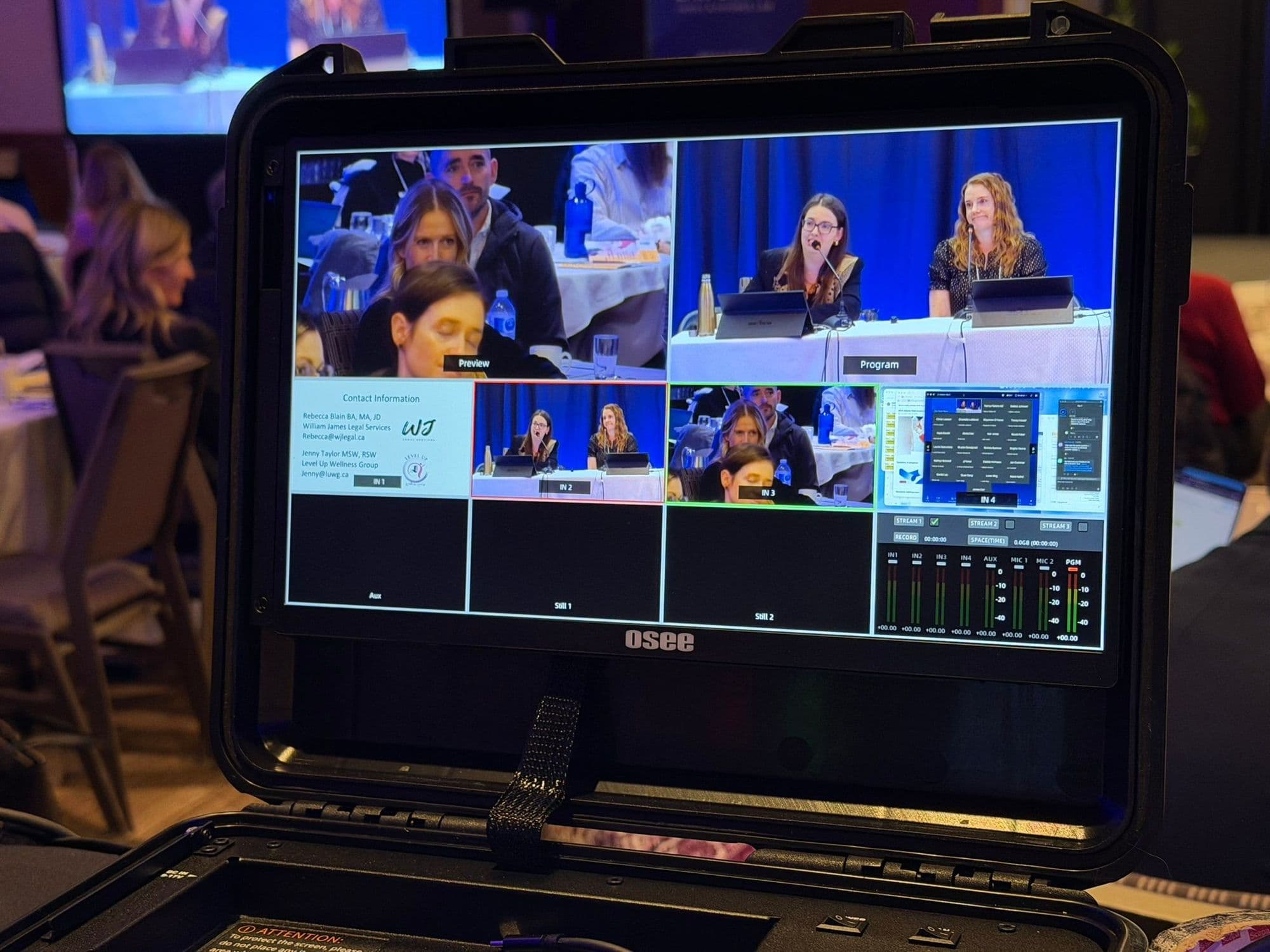

Hybridevents aren’t a trend in Alberta anymore they’re the format many organizationsrely on to keep conferences accessible, bring in remote experts, and expandreach without sacrificing the energy of in-person connection. AVIXA’s hybridproduction guidance frames it simply: hybrid succeeds when it blends in-personenergy with virtual reach through the right strategy, technology, andflawless execution.
At Northern Signal AV, our goal is to makehybrid feel easy for planners and presenters—while behind the scenes we treatit like broadcast: clear audio, stable video, a tested Zoom workflow, andrehearsed transitions. (Learn more about our Alberta production capabilities onour Production Services page.
What a “real”hybrid setup includes
A reliable hybrid conference setup has to serve two audiences at thesame time:
In the room: speech must be crisp andconsistent, visuals must be bright and readable, and presenters need confidencemonitoring.
Online: the stream must be stable, cameraangles must show what matters, and audio must feel like the listener is “in theroom.”
The International Webcasting Association’s hybrid best practiceshighlight a key truth: virtual viewers should receive balanced audio, andhybrid audio requires careful routing and feedback prevention through properisolation.
For Zoom-based delivery, Zoom explicitly documents “production setup”expectations such as camera/switcher outputs via SDI/HDMI and professionalprogram audio output feeding the broadcast workflow.
Zoombandwidth planning for Alberta venues
Hybrid events don’t just need internet—they need predictable internet.
Zoom publishes recommended bandwidth targets for meetings/webinars byquality level (including guidance for 720p, 1080p, screen sharing, and audio).These published figures are a planning baseline for remote speakers/panelistsand for what your network must support throughout the event.
Hybrid eventcost in Alberta: what drives the budget
Hybrid budgets vary widely because “hybrid” can mean very differentscopes. A budgeting best practice is to plan around cost factors such asaudiovisual production, venue setup, and the technology stack—rather thanassuming hybrid is a small add-on.
If you want a fast planning model, break your hybrid cost estimateinto: * equipment and systems * crew and show coverage * pre-production andrehearsal time * Zoom/webinar licensing and support * optional post-eventdeliverables (recordings, edits, highlight clips)
Bestpractices for flawless hybrid delivery
Here are the field-tested practices that prevent most hybrid failures:
Prioritize audio quality (especially for Zoom). Zoom notes that its default audio processing can be helpful, but in“professional audio” situations you may need to adjust settings to preservefull-range capture.
Plan for echo/feedback risk before show day.Zoom’s documentation explains echo can be caused by loud speakers, failed echocancellation, or microphone issues, and troubleshooting often involvesisolating sources. Hybrid rooms create echo risk quickly if multiple devicesjoin the meeting audio in the same space.
Rehearse the transitions, not just the presentations. AVIXA emphasizes tech checks, redundancy, and live monitoring of miclevels and stream quality—this is especially important for moments where remotespeakers appear on-stage or on screens in the room.
Use a structured production process. Aconsistent Discovery → Design → Showtime workflow reduces surprises (venueconstraints, sightlines, run-of-show timing) and helps align expectationsearly.
Case story:AFCC-Alberta 2026 Conference in Calgary (March 12–13, 2026)
AFCC Alberta Conference 2026 promotional image
In March 2026, the AFCC Alberta Chapter hosted its two-day conferencein Calgary with both in-person and online participation. The event tookplace March 12–13, 2026, at the Sheraton Eau Claire Calgary (255 Barclay ParadeSW, Calgary, AB), and was explicitly promoted as “In person | Online.”
Northern Signal AV supported the conference’s hybrid delivery focuswith a production approach built around three outcomes: Clear, reliablelive audio in the room for speakers and panel sessions, professionalvideo coverage so the online audience could follow discussions easily * Zoombroadcasting that wasn’t “one-way”—including bringing at least one Zoomparticipant into the venue hall experience so they could be seen/heard and joina panel discussion with the in-room speakers (a high-risk moment in hybrid ifaudio routing and echo control aren’t handled properly)
This is exactly where hybrid production becomes more than streaming.Hybrid best practices stress that audio routing and feedback prevention arecentral to serving both in-room and virtual audiences successfully, and Zoomitself documents echo causes and mitigation as a key reliability issue.
The result: the client specifically appreciated the flawlessexecution—the type of feedback you only get when the bridge between “room”and “remote” is stable all day.
Planning ahybrid event in Calgary or anywhere in Alberta?
If your next conference needs hybrid delivery (Zoom, remote speakers,online Q&A, or full broadcast-style production), Northern Signal AVprovides production services across Alberta—including staging, lighting, sound,and video—designed for corporate and educational events.
Explore: - Northern Signal AV Production Services - Get A Quote
Optional FAQ snippets you can add to the bottom
How much internet do I need for aZoom-based hybrid event?Zoom publishes recommended bandwidth targets for meetings/webinars (including720p and 1080p guidance) and notes Zoom adjusts based on network conditions—butproduction planning should still build in headroom.
Why do hybrid events fail?
The most common failure categories are audio (echo/feedback, inconsistent miclevels), unstable connectivity, and un-rehearsed transitions between in-roomand remote elements. Hybrid standards call out audio routing and feedbackprevention as core risks.